
VILLA AURELIA
A Neoclassical Private Residence
A Quiet Kind of Grandeur.
A two-storey neoclassical residence — designed as a study in proportion, where classical vocabulary, hand-forged ironwork, and museum-grade craftsmanship meet the rhythms of modern family life.
Foundations of a Slow Build.
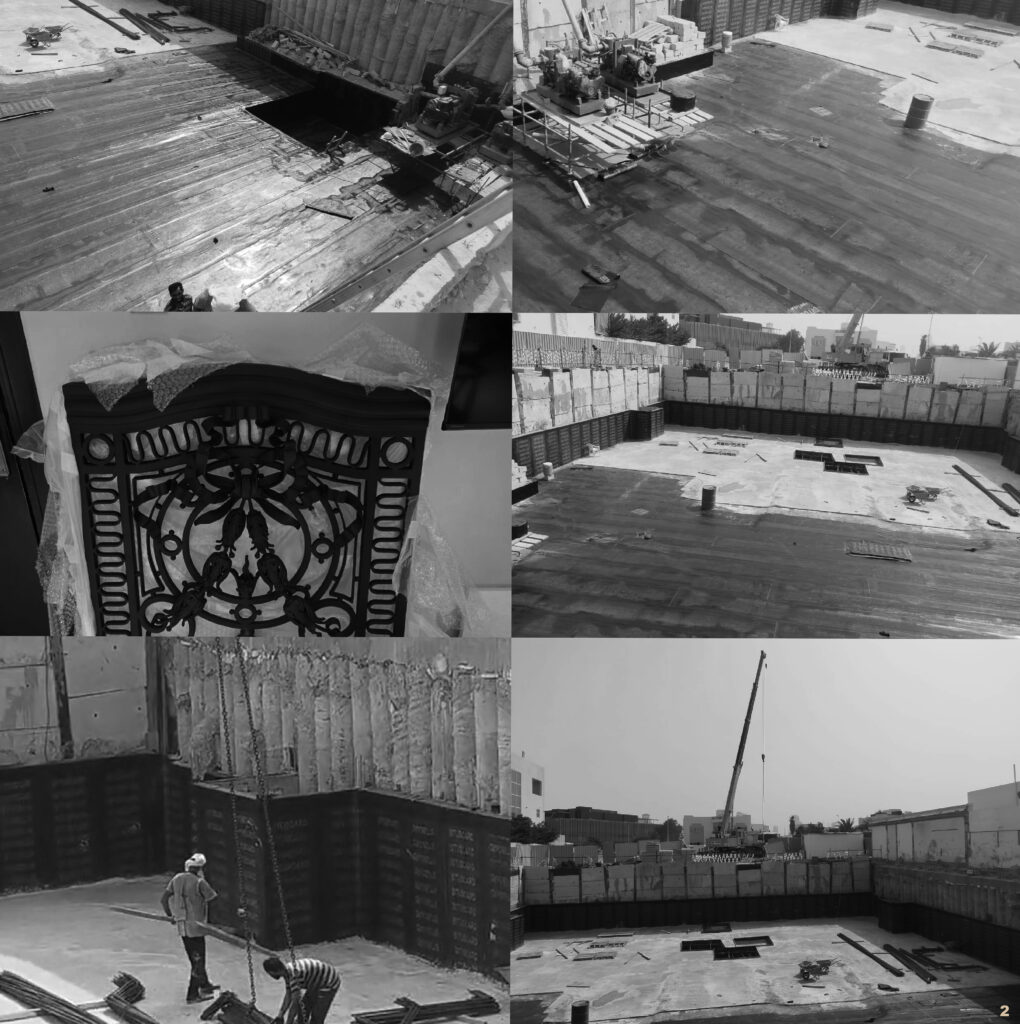
Villa Aurelia began long before the first stone was set. Months of substructure work — load paths, waterproofing, retaining walls, and the careful preservation of the original wrought-iron gate — laid the groundwork for a residence built to last generations rather than seasons. Nothing on the surface betrays the discipline beneath it, but every column, cornice, and casement above ground rests on this quiet rigour.
The Garden Side.
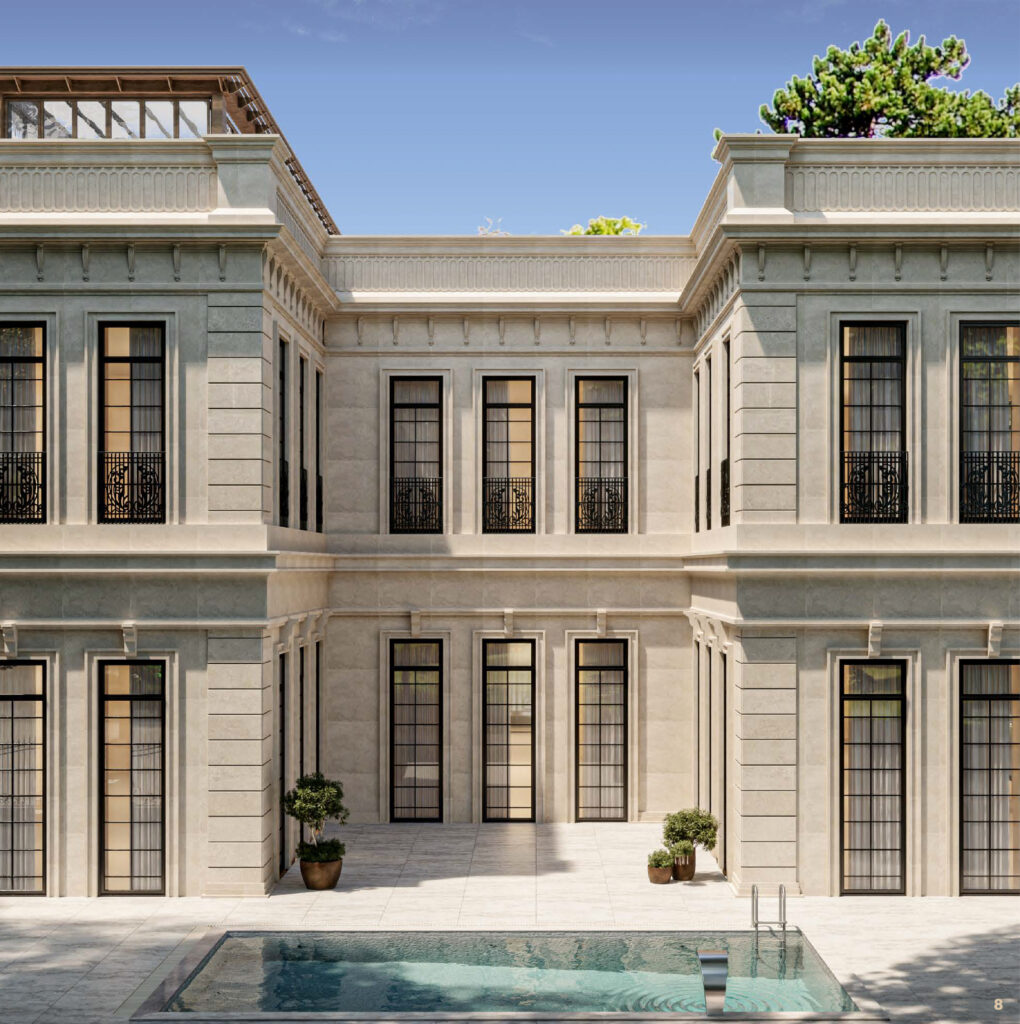
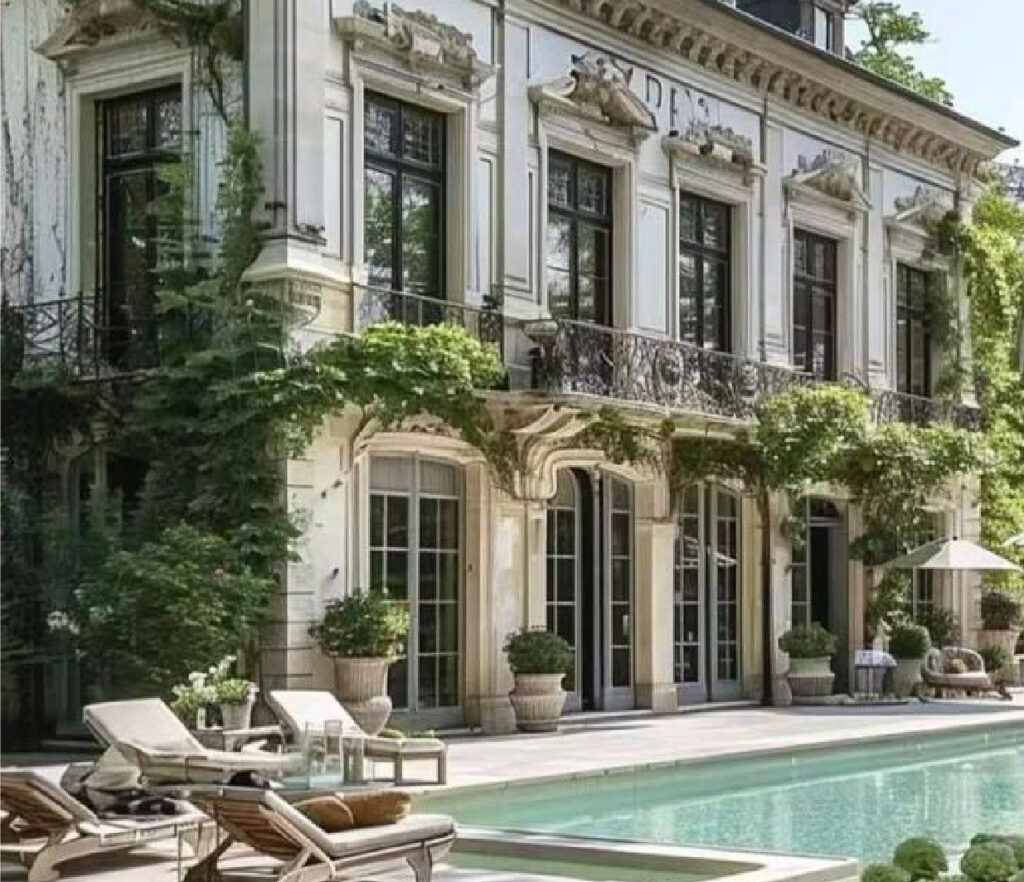
The rear elevation lets the formality breathe. Tall French windows with intimate black framing open the interior to the pool terrace, while the symmetrical arrangement of openings continues the language established at the front. Subtle cornices, pilasters, and finely detailed mouldings carry the neoclassical character through to the back of the house — but here, anchored by water and softened by greenery, the architecture feels less ceremonial and more lived-in.
Rhythm on the Left Flank.
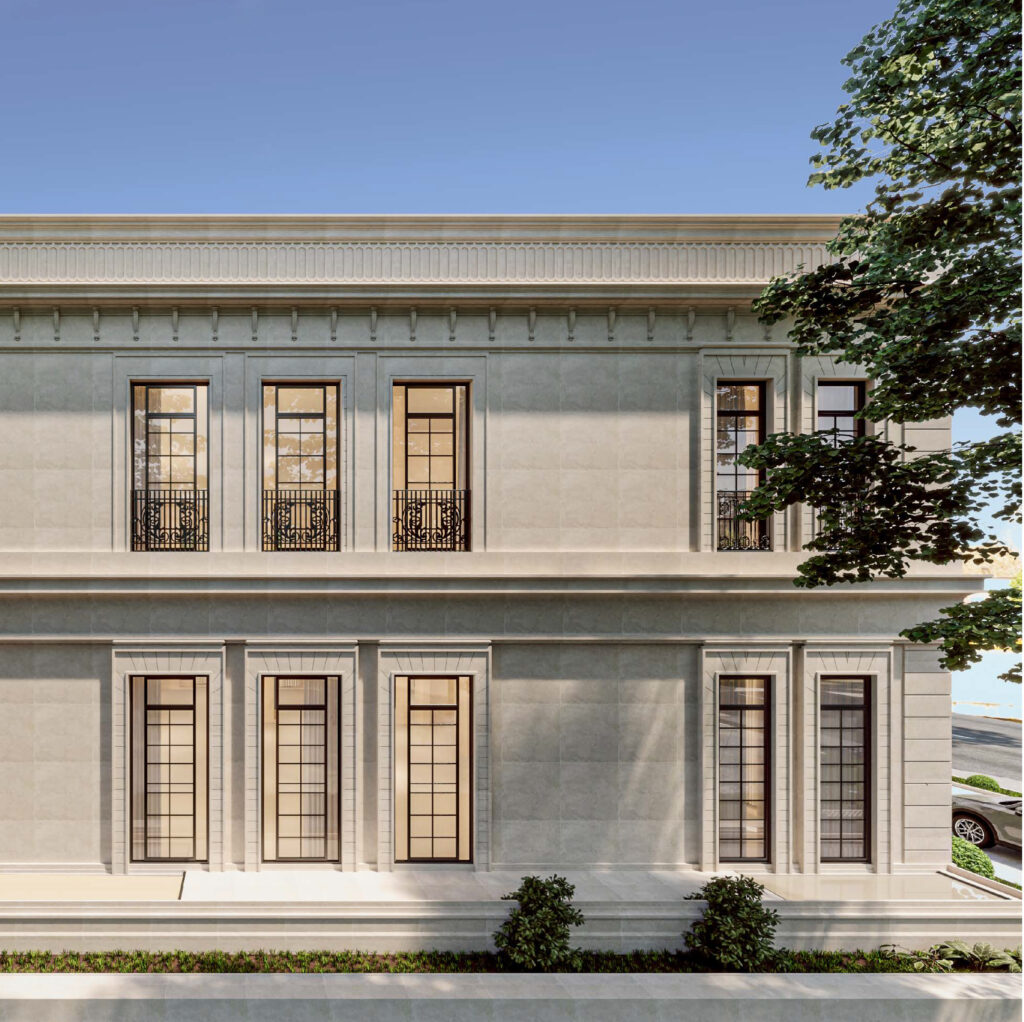
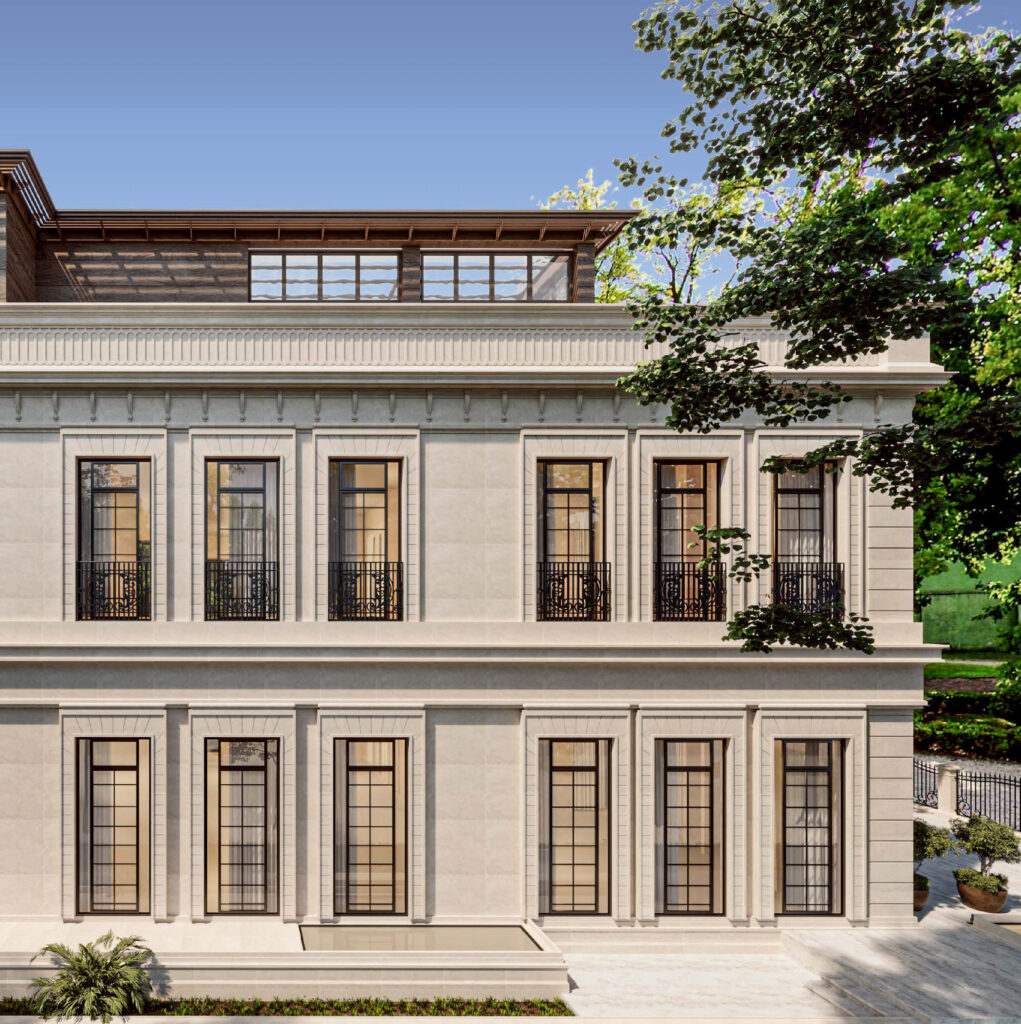
The left elevation is where the villa’s proportional logic becomes most legible. Tall, vertically aligned windows framed in stone create dignified symmetry, each enhanced with bespoke wrought-iron railings that add both security and artistry. Vertical pilasters and recessed panels lend structure and order — a quieter face of the house, but no less considered than the one that greets the street.
Where Classical Meets Contemporary.
The right elevation introduces the only contemporary note in the building’s exterior vocabulary — a rooftop pavilion of glass and timber sitting lightly above the classical stonework below. The juxtaposition is deliberate. By holding the traditional language across three elevations and allowing one moment of modern intervention, the villa signals that it is not a pastiche but a living home built in our own time.
A Bedroom Designed for Stillness.
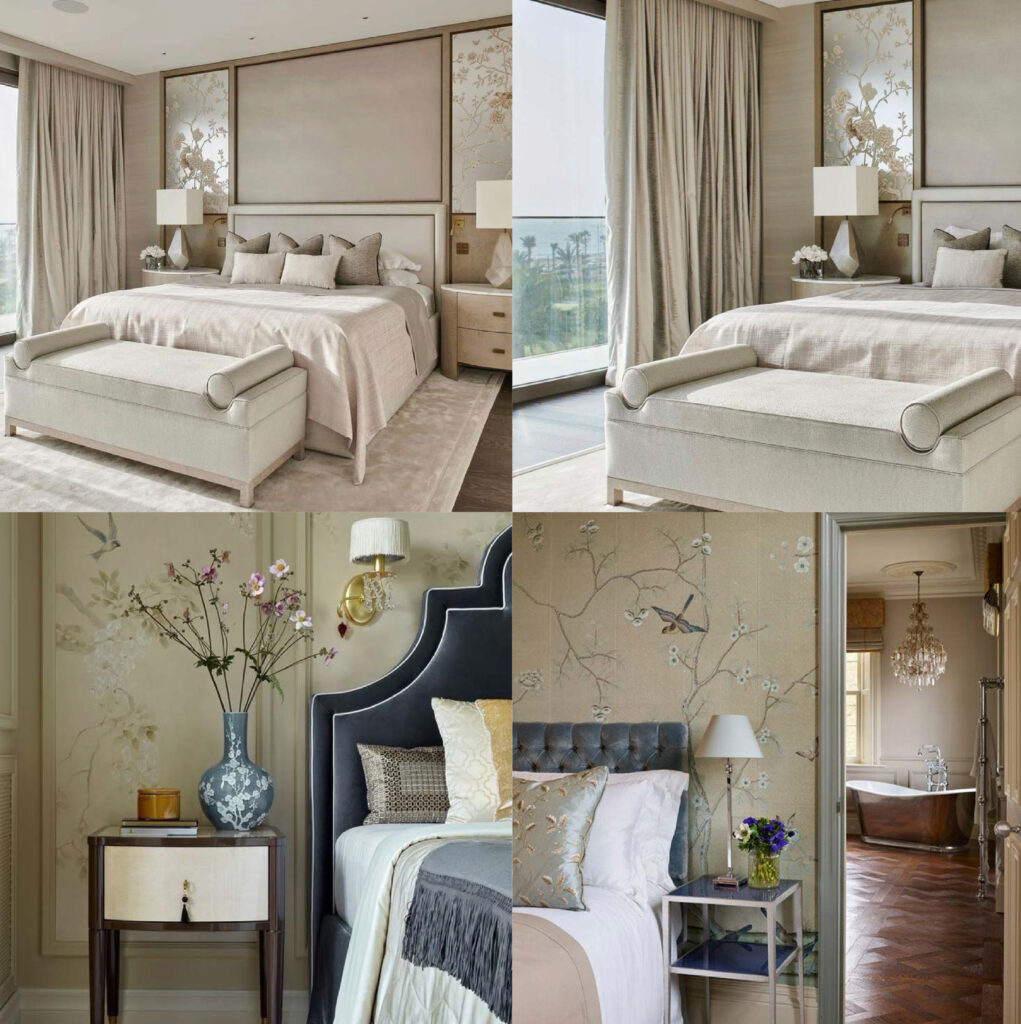
The guest bedroom is conceived as a sanctuary. A bespoke four-poster bed anchors the space, its custom canopy and soft drapery creating an intimate alcove without crowding the room’s generous proportions. Hand-painted botanical wallcoverings in soft blue-grey tones extend the calm — delicate floral motifs that turn the walls themselves into something contemplative. Every detail, from the neutral palette to the carefully scaled furniture, is calibrated for rest.
Four Stones, Four Roles.
he villa’s material palette is anchored by four signature stones, each chosen for a specific room. Honey-veined onyx becomes the dramatic focal point in the master bathroom, glowing translucent under sculptural lighting. Soft grey marble grounds the guest bathrooms and quieter living zones. Deep green marble brings sophistication to the lounge, extending floor to ceiling for visual continuity. And bold black marble with fine white veining anchors the formal living areas, creating a gallery-like atmosphere where stone meets natural wood.

A Garden That Belongs to the Climate.
The landscape design extends the architecture into the open air. Symmetrical layouts and a geometric pool reinforce the villa’s neoclassical proportions, while native and adapted palm species, mature vines, and carefully chosen plantings give the garden a sense of having always been there. Modern outdoor furnishings sit alongside classical planters without conflict — the formality of the architecture softened, but never compromised, by the realities of the local climate.
The Threshold.
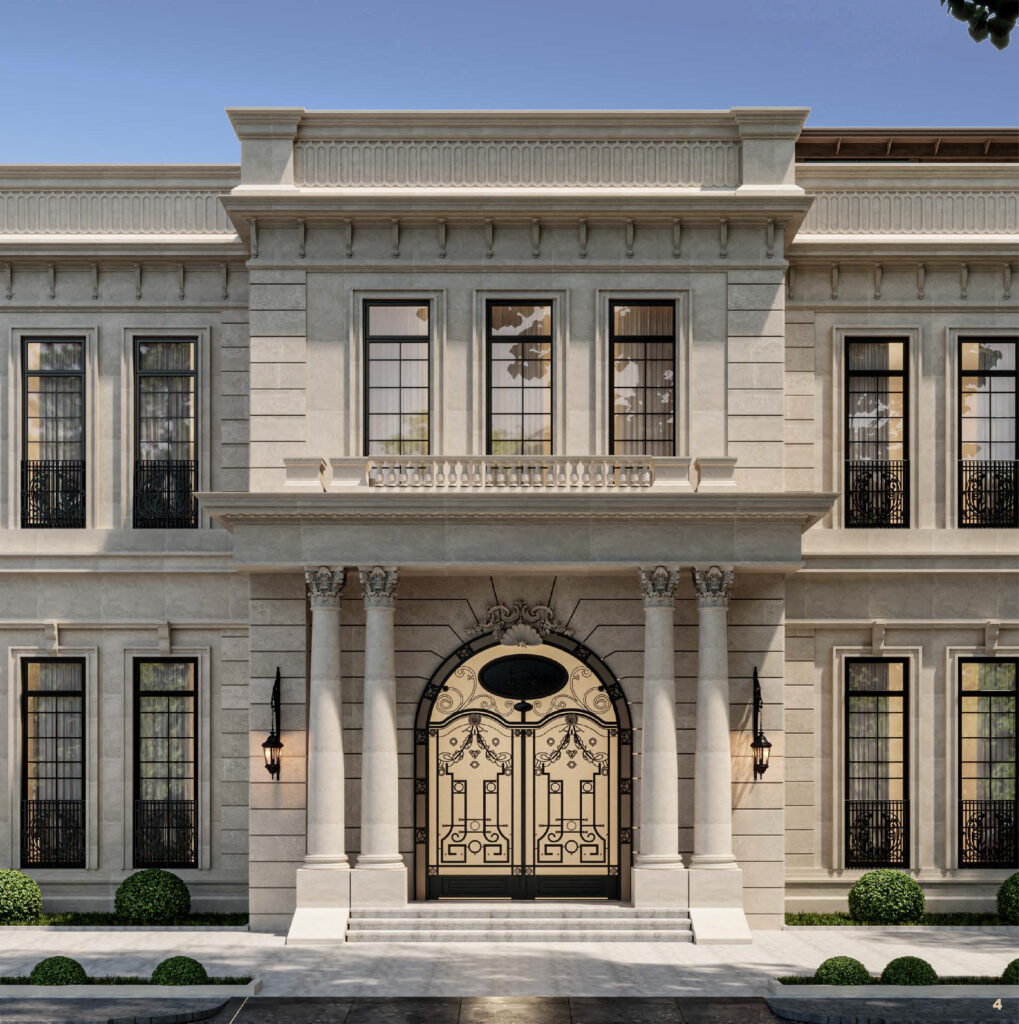
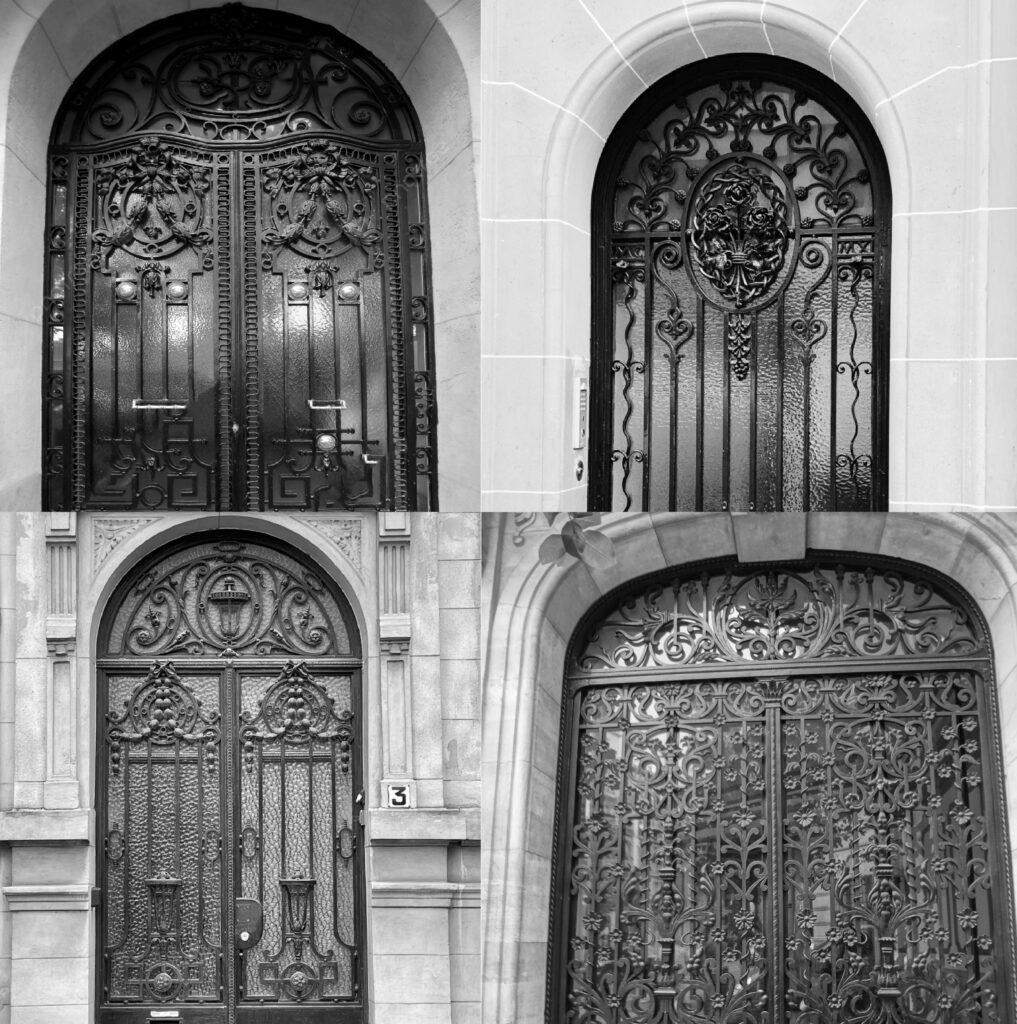
The villa’s entrance is its first conversation with the world, and that conversation is conducted in iron. Drawing on the great wrought-iron traditions of European architecture, the entrance doors and gates feature custom ironwork that pays homage to classical patterns while incorporating refined contemporary proportions. Filigree work meets bold structural elements; scrollwork, rosettes, and classical motifs come together within elegant stone archways. Old-world craftsmanship, executed for a modern home.
Wellness, Without the Showroom.
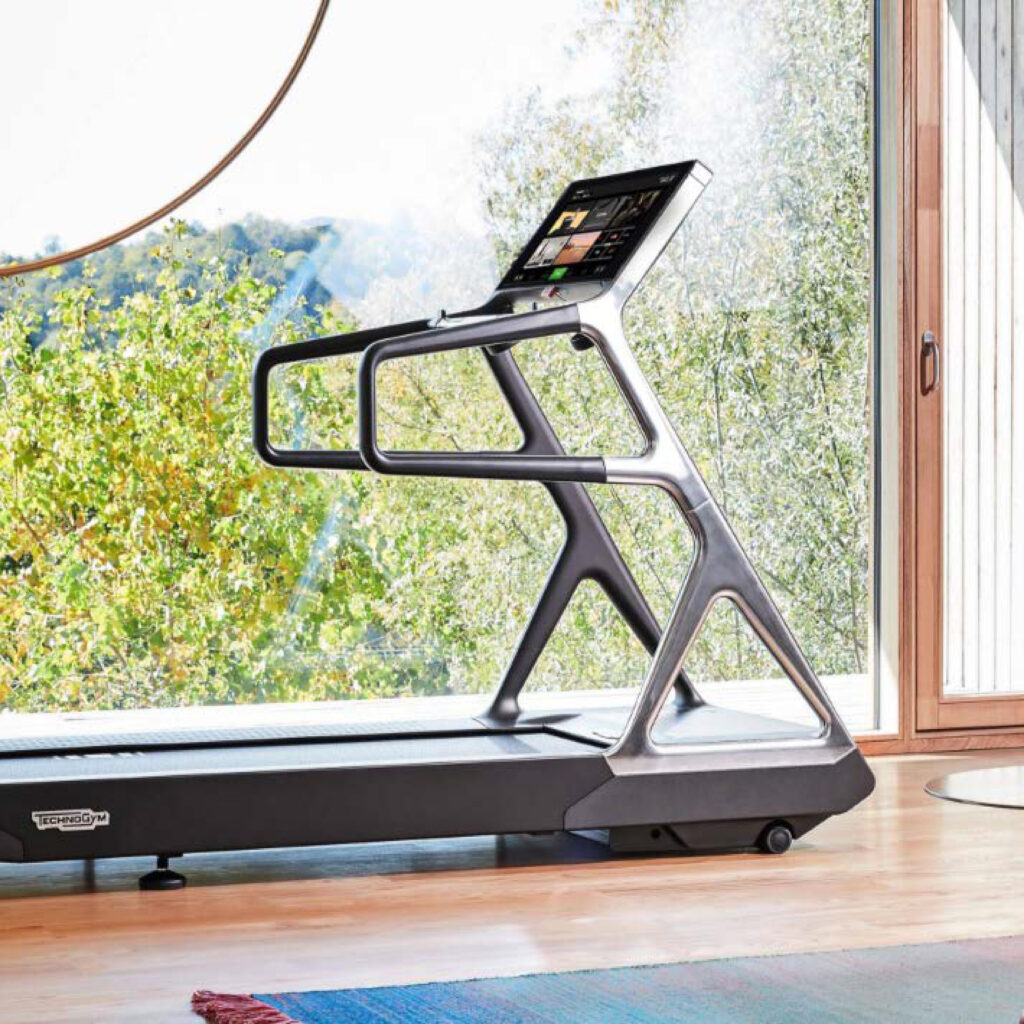
Founded in 1983 in Cesena, Italy, Technogym pioneered the wellness concept — defining it as a lifestyle built on regular activity, balanced nutrition, and a positive attitude. For Villa Aurelia, the brand’s ecosystem brings museum-quality fitness equipment into the home, engineered as much for the eye as for the body. Every machine sits as object before it sits as apparatus.
A Lesson From the Rue George V.
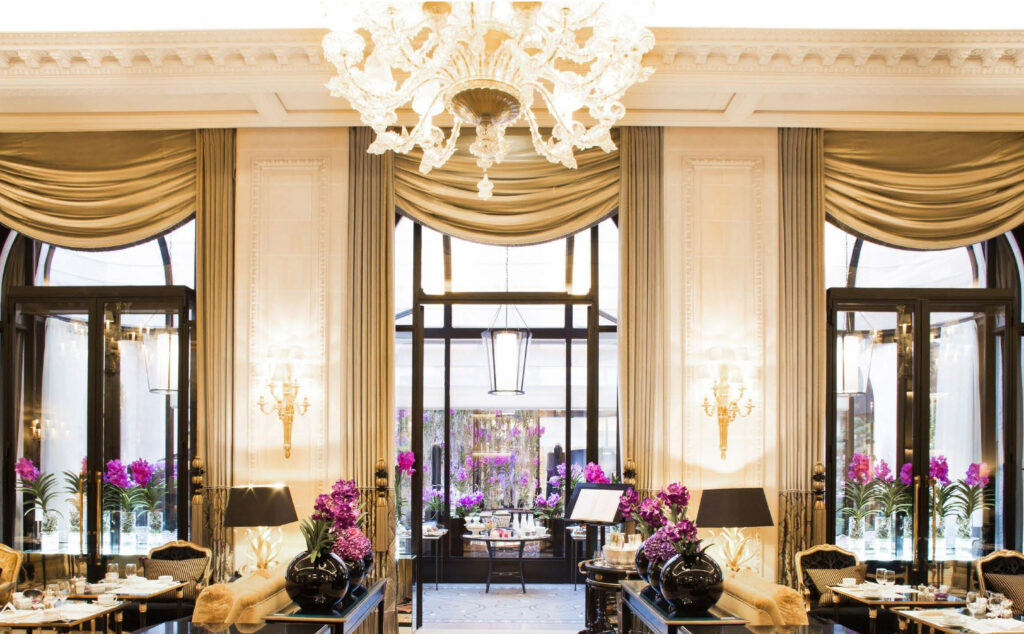
The Four Seasons George V in Paris served as the interior touchstone for Villa Aurelia — a study in 18th-century Parisian grandeur translated through Louis XIV and Louis XVI vocabulary. Flowing organic curves, intricate gilt bronze, and the masterful integration of fine arts with functional architecture all inform the villa’s interior brief. A refined palette of warm creams, soft golds, and rich burgundies — accented by crystal, mirror, and polished metal — sets the tone for spaces that feel intimate and grand at once.
Stone From the Tropics.
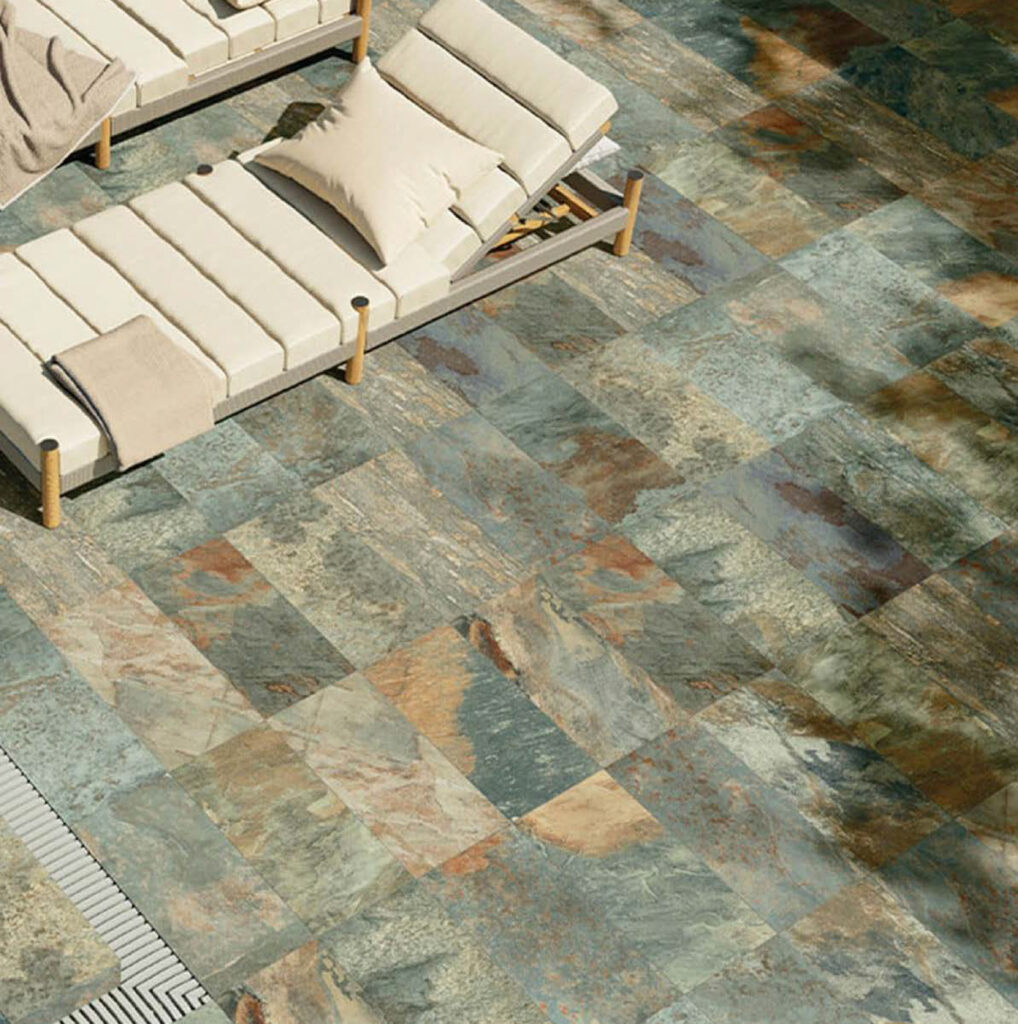
Bali Stone — operating under PT D&W International since 2005 — supplies the villa’s outdoor mosaic tiling. Specialising in authentic Bali marble, limestone, sandstone, and travertine, the company is known for exceptional water absorption rates under 0.5%, making the tiles ideal for pool and landscape use. The natural texture and earth-toned palette pay homage to the villa’s classical material logic while extending it outside, into the heat and the light.
A Room That Makes Wonder Architectural.
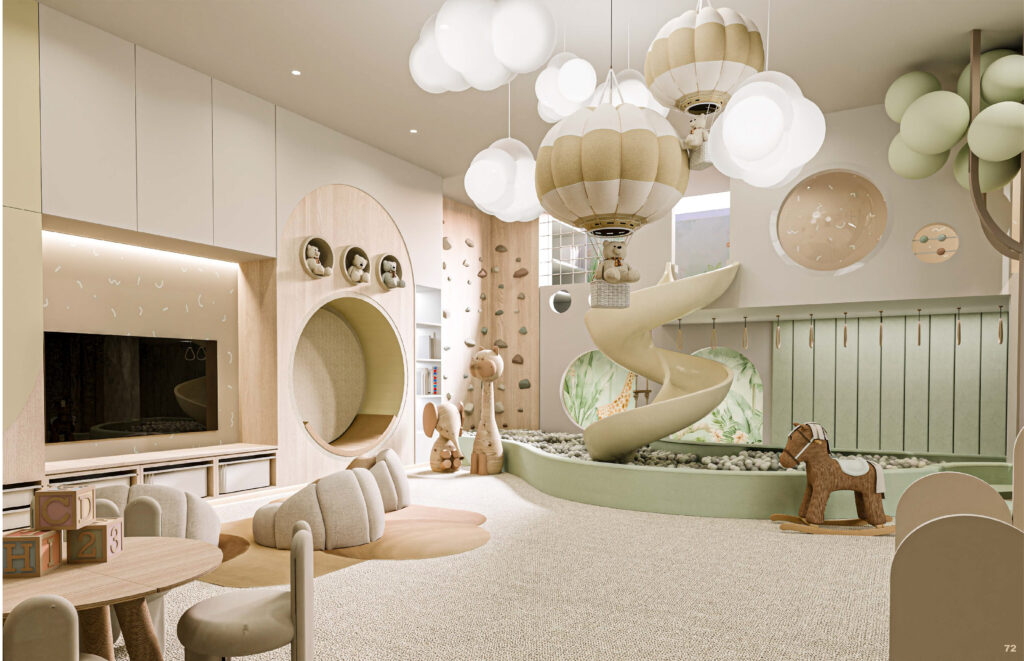
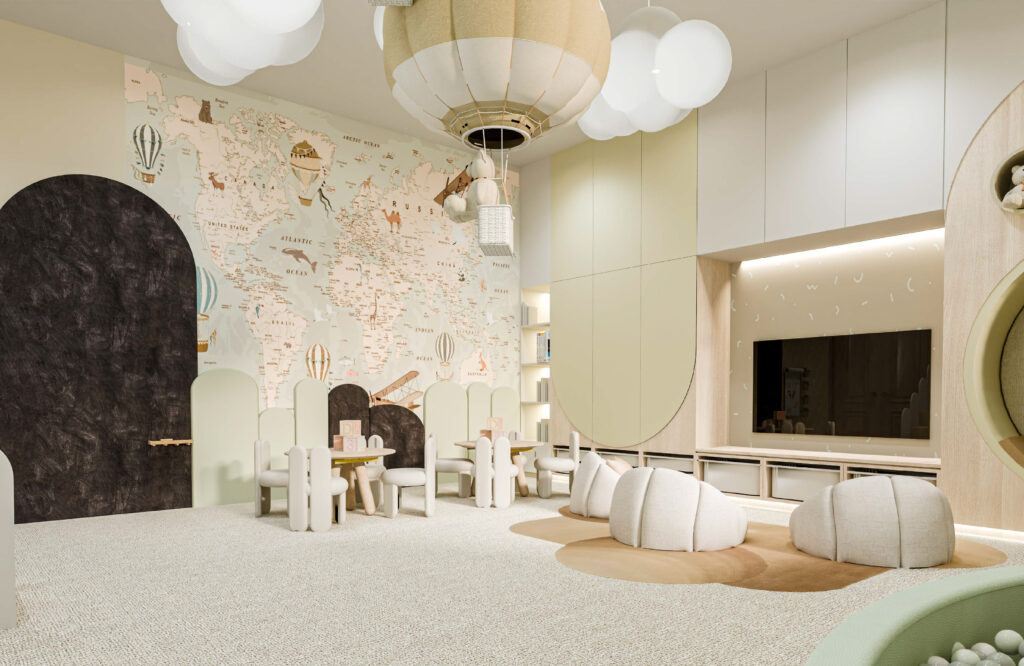
The children’s playroom is designed with the same seriousness as every other room in the house — but tuned to a different register. A sculptural ceiling installation of oversized organic pendants floats overhead like gentle clouds, casting soft amber and white light across a palette of warm cream, sage green, and pale oak. A multi-level play structure, climbing wall, and integrated reading nook give the room its functional life. Sophistication and play, held in the same frame.
A World Map for a Small World.
The opposite wall of the playroom becomes a geography lesson built into the architecture itself. A hand-illustrated world map covers the surface from skirting to cornice, joined by a hot-air balloon pendant and curved arches that transform the room into a small world of its own. Scattered wooden toys and building blocks add authentic touches of childhood without breaking the design language.
Fitness as Millwork.
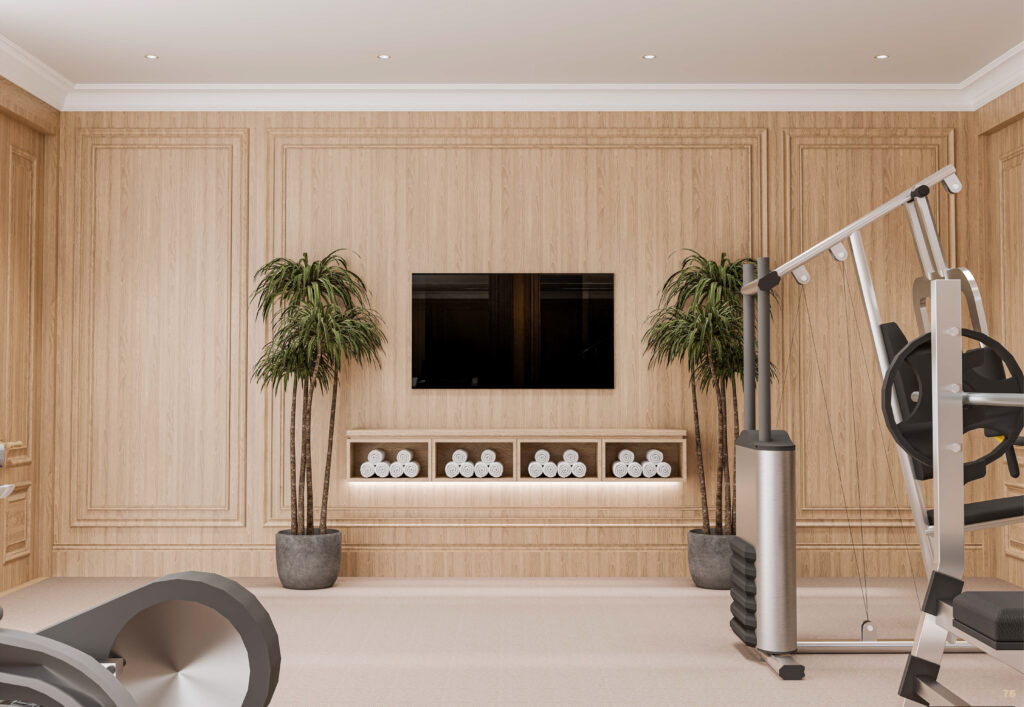
The home gym is anchored by a wall of rich warm oak panelling — precise geometric millwork that speaks more to classical interior tradition than to a typical fitness room. Integrated niches house towels and equipment with the same care given to a library’s recessed shelving. A built-in media wall, two substantial planters with cascading greenery, and discreet recessed lighting complete a space that reads, first, as a refined room.
Equipment in the Frame.
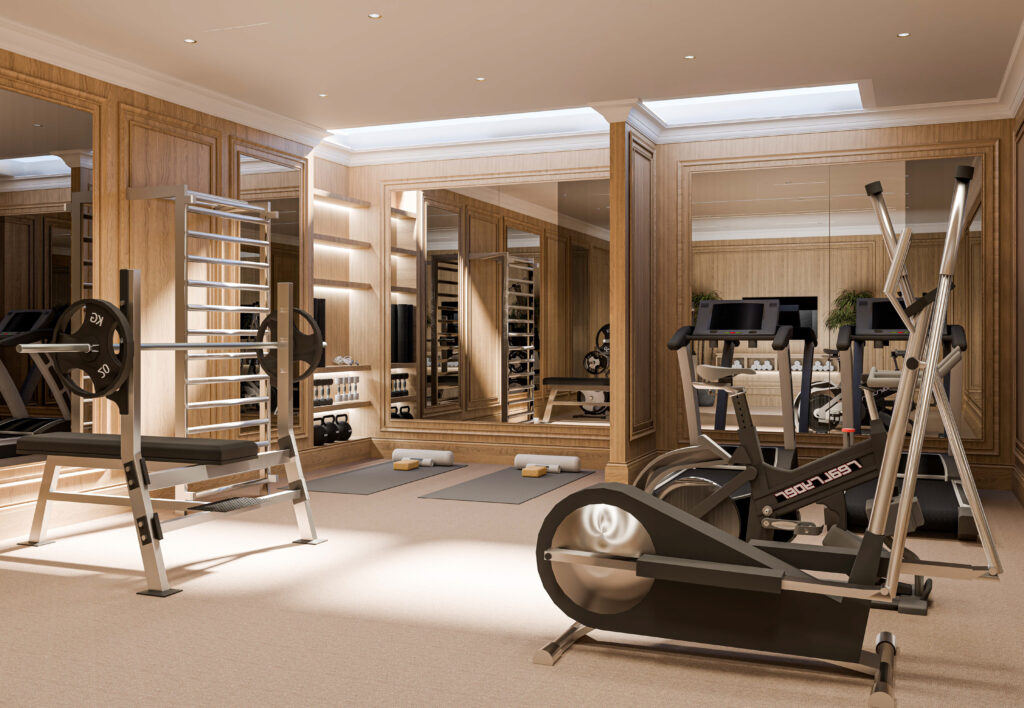
From the wider view, the gym reveals its full kit — mirrored panels expanding the space, a sleek cable machine system, and an exercise bike positioned with the kind of compositional care normally reserved for sculpture. The equipment’s clean lines and neutral palette let it complement rather than compete with the room’s millwork. Functional fitness, aesthetically integrated.
The Ritual of Dressing.
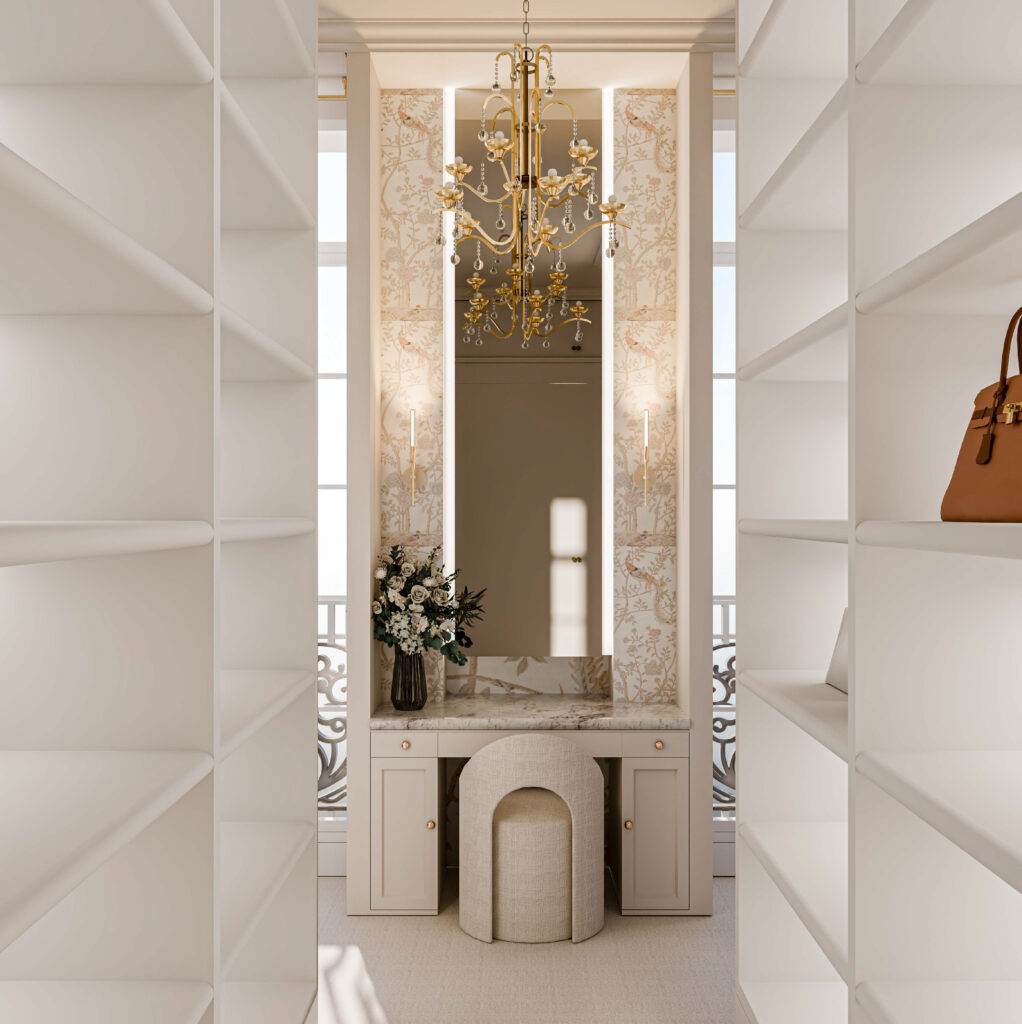
The walk-in closet transcends storage. Warm marble surfaces and crisp white millwork frame a central vanity, while flanking columns with rope-twist detailing add sculptural rhythm to either side. A gilt chandelier and hand-painted floral wallpaper behind the mirror lift the daily ritual of preparation into something ceremonial. Hierarchies are clear, proportions classical, materials honest — and the act of choosing what to wear becomes its own small architecture.
The Hand-Painted Room.
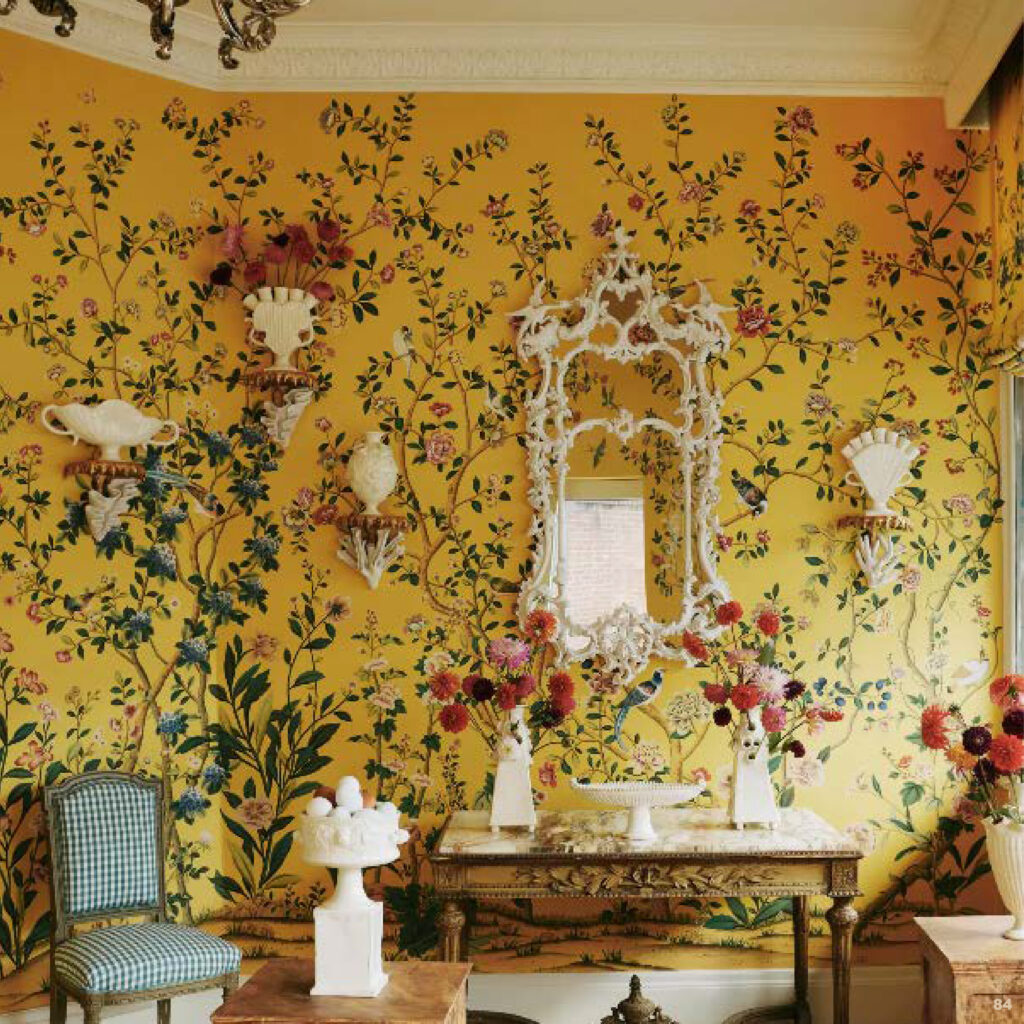
De Gournay stands as the pinnacle of hand-painted wallpaper artistry, transforming interior spaces into immersive works of art. Each panel begins as a blank canvas, painted by hand using traditional methods passed down through generations. For Villa Aurelia, a De Gournay installation becomes a unique commission — colour palette, scale, and composition customised to the home’s specific architecture, with the depth and subtle imperfections that only true handcraft can deliver.
Metal as Architecture.
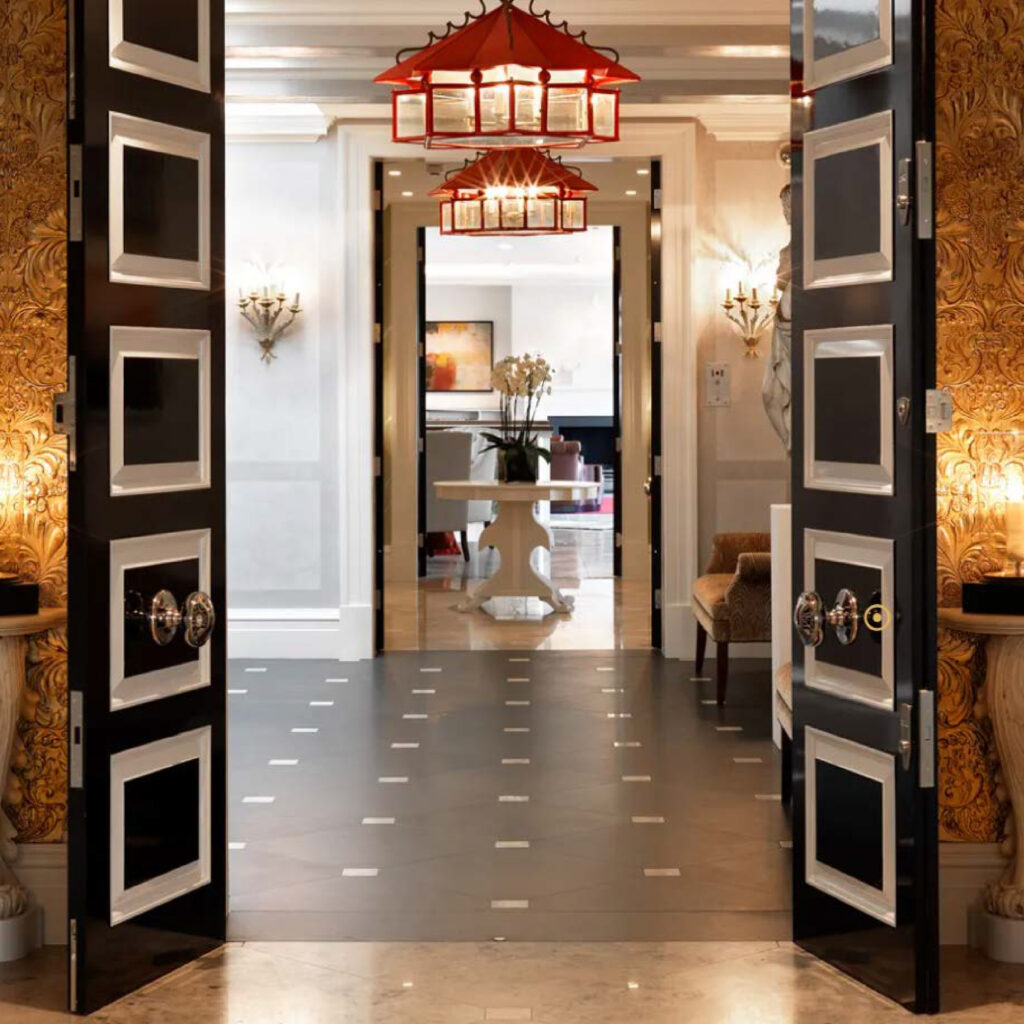
Beardmore Architectural is responsible for the villa’s commissioned metalwork. Where traditional blacksmithing meets contemporary design, the atelier produces hardware, balustrades, and decorative elements that feel integral to the architecture rather than applied to it. Their craftsmen possess an intimate knowledge of bronze, brass, and steel — and how each material responds to heat, pressure, and the artist’s hand. Every project begins with the architecture and ends as part of it.
Pieces With Provenance.
Established in 1964 in West Sussex, Adrian Alan Ltd. is one of the world’s most distinguished dealers in 19th-century furniture, sculpture, and lighting. A member of BADA and regular TEFAF exhibitor, the firm has spent six decades sourcing exhibition-quality pieces for private collectors and museums. For Villa Aurelia, Adrian Alan’s curatorial eye brings museum-grade gilt bronze, cut crystal, and Empire-era chandeliers into rooms designed to hold them with grace.

The Detail in the Hand.
Brass Art supplies the villa’s door and cabinet hardware. The company combines traditional metalworking with contemporary design across an extensive range of handles, knobs, and fittings — available in polished brass, brushed brass, copper, chrome, and matte black. Each piece is precision-engineered for durability and smooth operation, then finished by hand. In a house built on classical proportion, hardware is the smallest scale at which craftsmanship makes itself felt — and Villa Aurelia treats every doorway as an opportunity for tactile pleasure.

Begin the Conversation.
Villa Aurelia represents the kind of work we take on — projects where classical proportion, hand-craftsmanship, and considered modern intervention meet in a single architectural argument. If you’re planning a private residence and want a studio that holds the vocabulary from foundation to finish, we’d welcome the conversation.